
- Introduction
On 21 May 2026, the International Court of Justice (also known as the ‘ICJ’ or ‘World Court’) delivered an Advisory Opinion, which is of importance for workers across the globe. The question referred to the Court was whether the right to strike is protected under International Labour Organization (ILO) Convention No. 87 on Freedom of Association and the Right to Organise (C87). It should not be surprising that a clear majority of the World Court answered this question in the affirmative (by ten in favour to four against); it is only surprising that it was not unanimous. Nevertheless, it is a significant acknowledgement of the importance of the right to strike for effective worker organisation and activities nationally and transnationally. The World Court has recognized the vital connection between freedom of association and the right to strike, as well as the ‘great weight’ to be given to the decisions of the ILO supervisory bodies. We find that this contrasts with the problematic approach taken by both Rishi Sunak’s Conservative government and Keir Starmer’s Labour government to these matters. In this blog, we explain the background to the dispute, the reasoning of the ICJ, and the potential application of the Advisory Opinion in the ILO, the UK, and beyond.
- The origins of C87 and the current dispute
The ILO was established in 1919 in Part XIII of the Treaty of Versailles which ended the horror of the First World War. Several factors led to the creation of the ILO and its founding principle of ‘freedom of association’. It was, in part, a tribute to the 20 million dead, mainly working class people; to reinforce the social revolution which had ended the long centuries during which combinations of workers to improve, or at least protect, wages and working conditions had been illegal; a concession made in fear of the Russian revolution of 1917 spreading; and a recognition of the role of trade unions and collective bargaining in improving wartime production. The ILO introduced some notable Conventions and, after the even greater horror of the Second World War, entered a renewed phase of activity, becoming the first United Nations (UN) agency in 1946.
The ILO has remained unique in its tripartite constitution, requiring state delegations to consist of government, worker and employer representatives. These three groups from all member States vote on adoption of international labour standards in the form of Conventions and Recommendations in its annual International Labour Conference (ILC), and form its executive Governing Body. The ILO’s supervisory mechanisms are likewise formed of delegates from the three groups – with the exception of the Committee of Experts (on the Application of Conventions and Recommendations). At the ILO, the International Trade Union Confederation (ITUC) acts as a key representative of the workers’ group while the International Organisation of Employers (IOE) plays an equivalent role for the employers’ group. This was reflected in their standing before the ICJ in this litigation.
In 1947, C87 was adopted. Again, this was brought about by various underlying factors. C87 can be seen in part as a tribute to the eighty million dead in the Second World War, and partly as a concession to the partisans who looked to form or influence immediate post-war governments under the shadow of the Soviet Union. Most important was the recognition of the hugely significant role of trade unions and collective bargaining in wartime production. Likewise, trade union federations and the UN Economic and Social Council (ECOSOC) urged that measures were needed to ensure freedom of association and collective bargaining (including the right to strike) after their restriction during fascism. This is clear from records of debates in the tripartite ILC at that time.
C87 has since been ratified by 158 countries. The Convention seeks to protect the ‘activities’ and ‘programmes’ of workers’ organisations, as well as their purposes, but does not refer expressly to a ‘right to strike’. Nevertheless, various ILO instruments, such as Recommendation No. 92 (1951) and Convention No. 105 (1957) have explicitly recognised the necessity of protection of this right. Moreover, in this context, ILO supervisory bodies have for decades recognised that the right to strike is an indispensable corollary of freedom of association under both C87 and the ILO constitution.
The relevant ILO supervisory bodies for these purposes are:
- the Committee of Experts on the Application of Conventions and Recommendations, created in 1926 (which the ICJ calls the ‘Committee of Experts’ – sometimes abbreviated as the ‘CEACR’). It meets annually and considers the extent to which each State is or is not in compliance with the Conventions which it has ratified and those which are so fundamental they are binding on every Member State regardless of ratification (C87 is one such). Its decisions are published in full annually. A selection of the conclusions of the CEACR are then discussed at the ILC by the tripartite Committee on the Application of Standards (the ‘CAS’);
- the tripartite Governing Body Committee on Freedom of Association established in 1951 (often called the ‘Committee on Freedom of Association’ or the ‘CFA’), which, as the name implies, considers complaints brought against states on matters of freedom of association, including issues concerning the right to strike and has published past Digests and now an authoritative Compilation of past decisions of the CFA;
- the tripartite CAS, referred to above, which selects CEACR cases for consideration at the ILC; and
- various ad hoc Commissions of Inquiry established under complaint mechanisms provided under Article 26 of the original ILO constitution and the supplementary Fact-Finding and Conciliation Commission on Freedom of Association established in 1950.
The right to strike, as interpreted and applied by ILO supervisory bodies, is not unqualified, as is evident from the CFA Compilation as well as from the General Surveys issued from time to time by the Committee of Experts. Permissible limitations recognized at the ILO include procedural restrictions (in terms of how a strike is called); substantive restrictions (regarding the suitable aims of a strike); and restrictions acknowledging the consequences of a strike, for example when taken by ‘public servants exercising authority in the name of the state’, in essential services ‘the interruption of which would endanger the life, personal safety or health of the whole or part of the population’ and in the event of ‘an acute national emergency’. The right to strike has never been viewed as absolute, but at the same time the extent of limitations on the right must not be such as to deprive workers of their meaningful exercise of this entitlement to defend their economic and social interests (See the Compilation of CFA Decisions on Freedom of Association (2018), Chapter 10.)
For many years, the employers’ group at the ILO fully supported the findings (and the tripartite compromise that they represented), for example in the context of Cold War criticism of eastern bloc governments, such as Poland. However, the balance of power in the ILO shifted in the 1990s, when employers became emboldened to challenge norms that they had been prepared to agree to when there was a threat of socialist/communist revolution (which had been, as noted, the backdrop to the very foundation of the ILO in 1919).
The adamant assertion by ILO supervisory bodies that there is a right to strike that can be derived from freedom of association, the ILO Constitution and C87 has over decades influenced the interpretations of regional and international human rights institutions, but also national constitutional and supreme courts, which have drawn on the findings of ILO supervisory bodies, as has been well documented. However, by 2012, this interpretive approach was no longer deemed acceptable by the employers’ group at the ILO in an era of increasing neo-liberal economic governance.
At the 2012 ILC, led by a UK delegate supported by the Confederation of British Industry, the IOE staged a ‘walkout’ from the CAS on the basis that the employers’ group would not tolerate enforcement of the CEACR findings on the right to strike under C87. The irony was not lost on the workers’ group.
The reason given by the employers’ group was that the right to strike was not expressly referred to in C87, and was not implicit in the guarantee of freedom of association. Moreover, it was said that the CEACR had no authority to interpret C87 to include a right to strike. It was also claimed that the way that the right to strike had been interpreted and applied by the CEACR at the ILO had been too broad and generous to workers (even though the CEACR findings aligned with the tripartite CFA findings). The employers’ case was that the scope of any such entitlement should be determined solely at national level.
As a result, since 2012, there has been a crisis in the ILO supervisory system, whereby the employer representatives in the CAS have refused to consider cases relating to the right to strike under C87 and, as a result, the ILC has had little opportunity to condemn blatant breaches of the right to strike. Those cases have instead tended to go to the CFA as complaints, and the ILO Governing Body has in that context made recommendations to the state concerned. But employer cooperation in the CFA has also been increasingly minimal – giving rise to concerns that employer representatives were being obstructive there too – undermining the authority of the ILO system. Indeed, the IOE also became active in this respect outside the ILO by expressing opposition to protection of the right to strike through strategic intervention also in other human rights and constitutional litigation.
Finally, in November 2023, the decision was taken at the tripartite Governing Body to request the ILO Director-General, Gilbert F. Houngbo, to refer the dispute to the ICJ under Article 37(1) of the ILO Constitution. The employers’ group did not want this, having proposed instead the adoption of a Protocol to C87 that would provide a new set of parameters for dispute settlement, but this proposal did not sway the majority of the Governing Body. It was, as more than one commentator has observed, a high risk strategy from the workers’ group, for if the case went against them, the negative consequences could be far-reaching. This may indeed have been the reason that Rishi Sunak’s UK Government representative voted in favour of referral. It might also be observed that the fact that the workers’ group was in favour of taking such a risk speaks volumes about the ways in which the situation at the ILO was seen as a crisis that was no longer tolerable. Failing to address the situation would have undermined ILO supervisory procedures, but also had the potential to undermine longstanding global recognition of the link between freedom of association and the right to strike, which was the basis for much of the legal protection that workers’ organisations could rely on across the world.
- The findings of the World Court
The key reference point is the majority advisory opinion, reflecting the view of ten ICJ judges. Those findings are outlined below, with our analysis also being informed by the content of further ‘Declarations’ and Separate Opinions of those judges, as well as the four Dissenting Opinions.
- The question before the Court
The ILO asked the World Court a single question: ‘Is the right to strike of workers and their organizations protected under the Freedom of Association and Protection of the Right to Organise Convention, 1948 (No. 87)?’ The ITUC had explored with the ILO workers’ group representatives in the Governing Body the possibility of also asking whether the CEACR was ‘competent’ to: (i) determine that the right to strike derives from C87, and (ii) specify ‘the scope of the right to strike, its limits and the conditions for its legitimate exercise?’. Various commentators have asked subsequently why this further matter was not considered, suggesting that the majority ICJ opinion is somehow deficient for not having considered these additional issues. The workers’ side, by the time of the Governing Body decision to refer the dispute to the ILO, had reached the conclusion that, while posing these further questions might seem to address the attempt by the employers’ group to undermine confidence in the supervisory system, this was not a sensible tactic. Adding to the list of matters to be considered by the ICJ would ultimately have led to complications in the scale of submissions, and distracted from the crucial issue raised by the employers in 2012, namely the relationship between the right to strike and freedom of association.
It was the IOE, representing the employers’ group, which attempted to thwart delivery of a positive response to the question referred to the World Court by dwelling on the minutiae of differences in the treatment of scope of the right to strike in various States. The IOE written statement requested the Court to ‘allow consideration of the content of the right to strike, its limits or the conditions of its exercise, or make it possible to ascertain which authority has the competence to determine the scope and content of that right’ (Advisory Opinion, para. 56). The UK Conservative government had also presented similar arguments to the World Court in a written statement of May 2024, which was withdrawn by Keir Starmer’s Labour government subsequently (Advisory Opinion, para. 15). However, this former UK position was replaced by oral submissions to the ICJ delivered by several of the same legal advisers who had drafted the original pleadings, presenting arguments that continued to be problematic for the workers’ side. The UK oral statement delivered to the ICJ in October 2025 did (unlike the IOE and the original UK written statement) take the clear position that ‘the right to strike, although not expressly laid down in Convention No. 87, is a corollary of the right of trade unions freely to organize their activities’ (UK oral statement, Daniel Stilitz KC, para. 7). The UK also stressed that the right to strike was not absolute (which was at least consistent with ILO supervisory jurisprudence as outlined above). What is troubling is that, on this basis, the UK oral case went further, taking considerable time and effort to stress the position that the content of the right to strike was not customary international law and that its ‘contours’ should be determined at the national level, suggesting a lack of competence of ILO supervisory bodies in this respect (UK oral statement, Philippa Webb (UK) para. 2 et seq).
The ICJ ultimately refused to entertain any amendment to the question before the Court (Advisory Opinion, para. 58): ‘In the present proceedings, the question put by the Governing Body is both circumscribed and specific in so far as it asks the Court to determine whether the right to strike is protected under Convention No. 87. Since there is no ambiguity in either the question or its terms, the Court considers that there is no need to reformulate the question referred to it.’ This led in turn to the finding (para. 140) that: ‘The Court’s conclusion that the right to strike is protected by Convention No. 87 does not entail any determination on the precise content, scope or conditions for the exercise of that right.’ However, it should be noted that this was fully consistent with the ITUC submissions on this point and was by no means a disappointment to the workers’ group.
Indeed, the submissions of the UK which seemed to deny the authoritative status and authority of ILO supervisory findings of the right to strike do not appear to have been at all persuasive. Instead, the ICJ in its reasoning gave ‘great weight’ to the findings of the CEACR and CFA (Advisory Opinion, paras. 118 – 119), in a manner which arguably renders redundant the second question that the IOE wished to raise. In the words of Judge Tomka (in his Dissenting Opinion, para. 82), the ICJ majority’s opinion ‘appears to have implicitly answered a question that was never put to it: whether the CEACR is competent to determine that a right to strike derives from Convention No. 87.’ He meant this as a criticism but ultimately, the majority Advisory Opinion made no criticism of the findings of the ILO Committee of Experts or their constitutional competence to decide the legitimate limits of national restrictions on the right to strike. The CEACR is therefore under no pressure to change its interpretative practices. There is nothing in the judgment to cast doubt on the treatment of the scope of the right to strike by any of the ILO supervisory bodies, especially the CEACR and CFA (whose findings, the Court noted, have progressively converged – Advisory Opinion, para. 83). This seems appropriate, given the expert and tripartite competence that these supervisory mechanisms have respectively brought to their interpretation and application of freedom of association and the right to strike. There is no support from the World Court for the assertion of Keir Starmer’s Labour government that decisions regarding the content and scope of the right to strike belong only at the national level.
The Advisory Opinion interpreted C87 in accordance with Articles 31 and 32 of the Vienna Convention on the Law of Treaties (VCLT), which was considered by the Court to reflect established customary international law. The Court (Advisory Opinion, paras. 63 and 64) declined to agree the employers’ view that Article 5 of the VCLT was applicable, such that greater emphasis should be placed on the travaux preparatoires (i.e. the drafts and discussions leading to C87 back in 1947). Indeed, these preparatory materials were considered by the ICJ to be inconclusive and it was therefore inappropriate for them to be taken into consideration as supplementary means of interpretation (Advisory Opinion, para.111). Instead, the general principle of treaty interpretation reflected in Article 31 and other supplementary means permitted under Article 32 were applied.
- Article 31(1) VCLT regarding ordinary meaning and purpose
Article 31(1) VCLT provides that: ‘A treaty shall be interpreted in good faith in accordance with the ordinary meaning to be given to the terms of the treaty in their context and in the light of its object and purpose.’
Indeed, the Court’s findings on ordinary purpose and meaning under Article 31(1) reflected ITUC and numerous other sympathetic submissions. Article 3(1) of C87 states that ‘workers’ and employers’ organisations shall have the right … to organise their administration and activities and to formulate their programmes’. Article 10 further explains that ‘the term organisation means any organisation of workers or of employers for furthering and defending the interests of workers or of employers’. In other words, the ordinary meaning of these provisions indicates that workers’ organisations are entitled to organise their activities to further and defend workers’ interests. It was always going to be difficult, on a literal meaning, to see why the right to strike should be excluded from such ‘activities’.
The principle that a failure to expressly include a term should not necessarily be assumed to mean it was intended to exclude it had been applied by the Permanent Court of International Justice (PCIJ) in a previous reference from the ILO in 1922. It was again applied here. More than this, the World Court recognised the particular significance of the right to strike in labour relations and its relationship with freedom of association, which shaped its view of the text of C87: ‘…strike action is one of the main activities engaged in and tools used by workers and their organizations to promote their interests and improve conditions of labour, thereby ensuring the effective exercise of the freedom of association protected under Convention No. 87. At the same time, freedom of association is instrumental in facilitating workers’ organizations to take collective action to further and defend the interests of their members, including through the exercise of the right to strike. Therefore, the protection of the right to strike is in line with the object and purpose of Convention No. 87.’ (Advisory Opinion, para. 73)
This is a strong statement which is likely to have significant influence on judicial proceedings and legislative drafting across the globe. The concurring Declaration of Judge Cleveland goes even further in explaining the labour relations (as opposed to the legal) context. She observed (at para. 5): ‘Workers do not form organizations to play cards. … a strike is a vital tool for protecting workers from exploitation and defending human dignity in the workplace. Without the right to strike, employees lose the leverage needed to overcome power asymmetry in the workplace and at the bargaining table, so employers no longer need to negotiate in good faith.’
This judicial recognition of the reasons for protection of a right to strike as a vital aspect of freedom of association can and should be contrasted with the oral submission of the UK Labour government, which merely observed briefly that the provisions of C87 ‘logically included strike action’ (UK oral statement, Daniel Stilitz, para. 8) and (at para. 9) paid greater attention to the reasons why this was beneficial for ‘business’. The views of two of the dissenting judges, namely Judge Abrahams’ attempt to distinguish between recognition and protection of ‘activity’ and ‘activities’ under Article 3 of C87 and the position taken by Judge Xue that it is possible to say that ‘industrial action’ is covered under Art. 3 but not a right to take such action, entirely failed to persuade the majority of the World Court.
- On ‘subsequent practice’ and the findings of ILO, as well as international and regional human rights supervisory bodies – under Articles 31(3) and 32 VCLT
The UK oral submissions to the ICJ had highlighted the diversity of state practice concerning the right to strike (UK oral statement, Ms Philippa Webb, paras. 2 et seq). In the Advisory Opinion, subsequent practice is deemed relevant in two ways. Firstly, subsequent state practice is considered (where relevant) under Article 31(3)(b) VCLT requiring effectively unanimous consent by the parties to the relevant instrument (here C87), which would be demonstrated by ‘a concordant practice embracing all the parties and showing their common understanding of the meaning of the treaty’ (Advisory Opinion, para. 77 citing Yearbook of the International Law Commission, 1964, Vol. II, p. 204, Article 69, paragraph 13). This is obviously a high threshold which was not satisfied. However, subsequent practice, for example of ILO supervisory bodies and state respect for these, can also be relevant in a second way, namely as ‘supplementary means’ of interpretation under Article 32 VCLT (as discussed also in the Advisory Opinion, para. 77). This meant that ILO supervisory bodies’ findings and the response of states parties to these, though not regarded as being of assistance under Article 31(3)(b), but were held to be relevant under Article 32. In his dissenting opinion, Judge Tomka is critical of this two-pronged approach, but it is a principle that has a pedigree dating back more than half a century.
Finding no subsequent agreement between state parties to C87 that was noteworthy under Article 31(3)(a), nor sufficiently ‘concordant’ practice under Article 31(3)(b), the Advisory Opinion turned to relevant rules of international law under Article 31(3)(c), or what has also been described as ‘systemic interpretation’. Of key relevance here were two UN Covenants of 1966 and their supervisory machinery, given the express reference to C87 in Article 8(3) of the International Covenant of Economic, Social and Cultural Rights and Article 22(3) of the International Covenant on Civil and Political Rights. The ICJ Opinion stated that it was not necessary for all parties to C87 to be bound by the Covenants and ‘relevant rules of international law’ for ‘those rules to be taken into account’ (Advisory Opinion, para. 90). This raised concerns from some of the judges who contributed to the majority opinion, such as Judge Nolte, as well as those presenting a dissenting opinion, such as Judge Hmoud. But it is evident that the Court took great care to demonstrate the overlap in parties to the C87 and these two instruments, alongside the conduct of states regarding their specific reservations and consequent behaviour (Advisory Opinion, paras. 93 – 95). The Court concluded on this basis (at para. 96) that: ‘In these circumstances, the Court considers that the two Covenants contain relevant rules that must be taken into account when interpreting Convention No. 87. In particular, Article 8 of the ICESCR and Article 22 of the ICCPR assist in establishing a common understanding of the States parties to Convention No. 87 that the protection of the right to strike is encompassed in the protection of the freedom of association guaranteed by Convention No. 87.’ The Court not only referred to the findings of the supervisory bodies with respect to state reports and complaints, but also to a 2019 Joint Statement by the two Covenant supervisory bodies, the Human Rights Committee and the Committee on Economic, Social and Cultural Rights, which upheld the right to strike by both Covenants (Advisory Opinion, para. 97). It is an approach which is consistent with and further develops the World Court’s recent Climate Change Advisory Opinion in 2025.
This appreciation of the right to strike as a human right did not find favour with dissenting Judge Xue, who commented that: ‘The majority’s response to the request, in my view, largely reflects an exercise of human rights advocacy rather than treaty interpretation.’ (Dissenting Opinion of Judge Xue, para. 3). She, like the UK government, identified diversity in domestic state practice regarding the scope of the right to strike, but struggled to identify instances of divergence in the international and regional human rights supervisory systems, or indeed at the ILO. Her claim that ‘Freedom of association and the right to strike have been treated as distinct rights not just in the field of international labour law, but also in international human rights law’ (Judge Xue, para. 23) is perhaps curious given the degree of consistency readily detectable, and identified by the vast majority of the Court on this point. They are different in scope but that does not prevent the latter being inherent in the former.
It was when applying Article 32, considering ‘supplementary means of interpretation’, that the ICJ ascribed ‘great weight’ to the pronouncements of ILO supervisory bodies, akin to the ‘expert treaty bodies’ elsewhere in the UN system who are engaged in ‘monitoring the proper implementation of the provisions of the convention under their supervision’ (Advisory Opinion, para. 118). This does not mean that the World Court is necessarily bound by the interpretative findings of these supervisory bodies, whether in the UN or at the ILO, but they will be given considerable respect (see Ahmadou Sadio Diallo (Republic of Guinea v. Democratic Republic of the Congo) and Application of the International Convention on the Elimination of All Forms of Racial Discrimination (Qatar v. United Arab Emirates), both of which are cited in the Advisory Opinion, para. 118). Moreover, the ‘progressive convergence’ of ILO supervisory bodies on the right to strike was found to be persuasive by the World Court in this instance (Advisory Opinion, para. 119). Further, various regional human rights instruments were regarded as ‘relevant as supplementary means of interpretation’ for C87 ‘since they reflect the position of the States parties to those instruments regarding the relationship between the protection of the right to strike and the protection of the freedom of association, alongside the ‘[p]ronouncements of human rights courts or bodies established by these instruments’ (Advisory Opinion, para. 120). As is well known by international labour lawyers (and the ITUC), these regional human rights mechanisms follow an almost identical trajectory towards recognition that ‘the protection of the right to strike is encompassed in the protection of the freedom of association’, further confirming ‘the interpretation reached by the Court in applying the general rule reflected in Article 31 of the Vienna Convention on the Law of Treaties that the protection of the freedom of association under Convention No. 87 encompasses the protection of the right to strike’ (Advisory Opinion, para. 137).
Indeed, Judge Cleveland went further in her concurring Declaration, asserting (at para. 19) that: ‘Finally, although the Court does not examine the question given the breadth of recognition of the right to strike in numerous overlapping international and regional instruments, as well as in bilateral and trade agreements, the constitutional protection of the right to strike in at least 97 States and its legislative protection in more than 150 others a compelling case can be made that protection of the right to strike is a principle of customary international law. Such a customary international norm would also constitute a relevant rule of international law in the interpretation of Convention No. 87.’ This is notably a much bolder approach than was contemplated in the oral submissions of the UK government.
- What comes next?
The ICJ Advisory Opinion was not discussed at the June 2026 ILO ILC. Instead, the focus there was on securing adoption of key instruments, such as Convention No. 193 on Decent Work in the Platform Economy. The aim of the International Labour Office and Director-General seems to have been to pre-empt the employers’ group from staging another walkout. The result was that, for yet another year, no cases relating to the right to strike were deliberated on at the CAS and Conference. The moratorium on discussion of the right to strike continued, despite the pronouncement by the World Court that the right to strike is protected under C87 (Advisory Opinion, para. 142).
The ILO’s response to the World Court’s Advisory Opinion will now be considered at the November 2026 tripartite Governing Body meeting. At the time that the dispute was submitted to the Court, the Written statement of the International Labour Office (at pp 35 – 41) made clear that it was expected that any Advisory Opinion would be binding on the ILO, in accordance with Art 37(1) of the ILO Constitution which was the basis of the referral. There remains, however, a danger that the tripartite politics of the ILO mean that the ICJ’s findings will be diluted or lead to an accommodation that takes the form of future standard-setting, rather than restoration of respect for ILO supervisory findings on this issue. There are also ongoing funding issues at the ILO, caused by a pause in payment by the US Trump administration that led to job losses and other retrenchment in spending. It is a weakened ILO that is now seeking to implement the Advisory Opinion. As a result, it may well be that the Advisory Opinion plays a more significant role outside the ILO, in the regional and international human rights mechanisms mentioned therein.
One senses that, despite the adoption of the Employment Rights Act 2025 and at least partial reversal of certain reforms made by earlier Conservative administrations relating to exercise of the right to strike, Keir Starmer’s Labour government was not enthusiastic about continued protection of the right to strike at the ILO. Whether Andy Burnham’s premiership takes a different line remains to be seen. At the time of writing, the 50% strike turnout threshold for a lawful ballot has yet to finally be repealed, although there were initially plans to do exactly this. Some aspects of UK law, such as the absence of any positive right to strike (with only immunities from liability and circumscribed protections from dismissal provided for by legislation) seem likely to remain. There are no plans to respond to ILO criticism of UK legislation on sympathy strikes, despite decades of criticism by the ILO supervisory bodies including a reminder in February 2026 by the Committee of Experts directed to the Labour government: ‘… that in the context of globalization and interdependence and internationalization of production, workers should be allowed to take action under sympathy strikes, as long as the initial strike they are supporting is itself lawful, the Committee urges the Government to take measures, in consultation with the social partners, to overcome the challenges regarding the legislative prohibition of sympathy strikes in order to be in conformity with freedom of association.’ It is possible to detect a reluctance to address this, which coheres with a decision taken by the UK government in October 2025 to present oral submissions to the ICJ that sought to diminish the authority of ILO supervisory bodies on the ‘contours’ of the right to strike. One can only hope that the Burnham Labour government will change its tune and act as an ally to the worker representatives within the ILO, in the UK and beyond.

Professor Tonia Novitz is Professor of Labour Law at the University of Bristol School of Law. She is currently a UK representative on the advisory board of International Lawyers Assisting Workers (ILAW), and a Vice President of the UK Institute of Employment Rights. She was a founding co-director of the Bristol Centre for Law at Work. Her research interests encompass labour rights, international and EU trade, sustainability and migration.
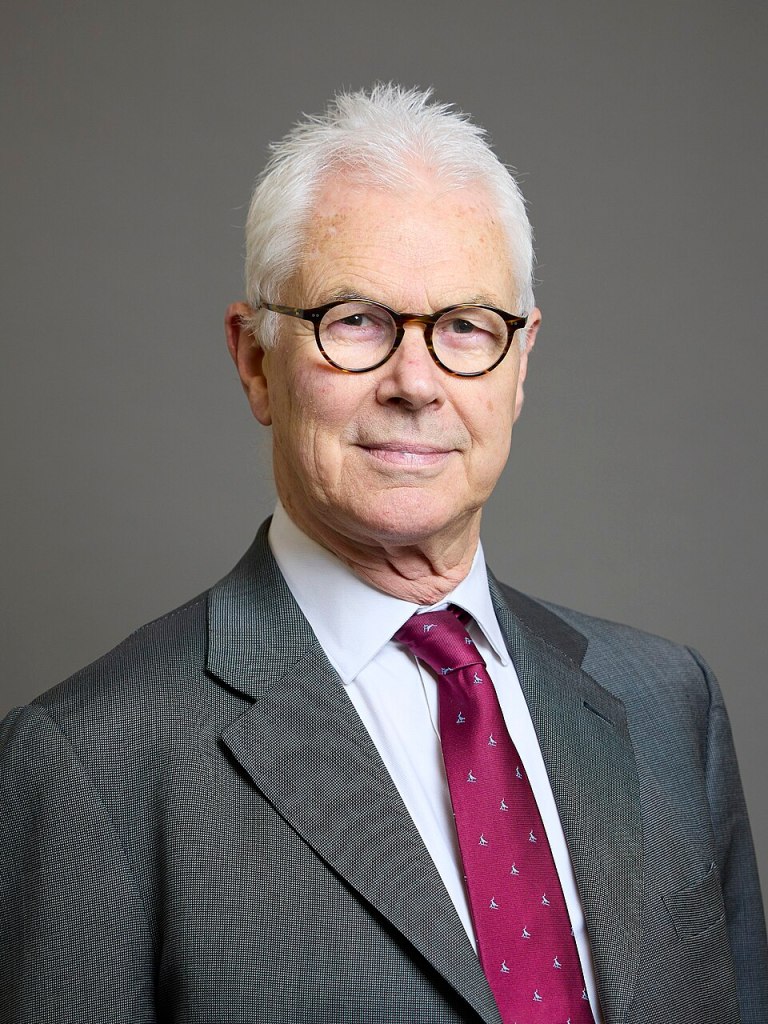
Lord Hendy KC was called to the Bar in 1972 and, after establishing and running the Newham Rights Centre for three years and lecturing for a year, he started practice in 1977 and took silk in 1987. Since 2014, Lord Hendy has been an Honorary Professor in the Faculty of Law, University College, London and a member of its Labour Rights Institute as well as Chair of the Institute of Employment Rights and President of the International Centre for Trade Union Rights.
Suggested citation: T Novitz and J Hendy, ‘’Workers do not Form Organizations to Play Cards’… The Significance of the World Court Advisory Opinion on the Right to Strike for the UK’, UK Labour Law Blog, 14 October 2026, available at https://uklabourlawblog.com

